Tips & inspiration
A chatbot or a leadbot on your website?
Although a chatbot and a leadbot look very similar at first glance, they differ considerably in some areas. Each serves a different purpose. Read on to find out more.

Talitha Harthoorn
Partner Success Manager · October 14, 2024 · 5 min

Before we begin
What we do know is that website visitors have less and less time or patience to comb through a website looking for an answer. Before you know it, your website causes irritation and you've lost the visitor. How to prevent this? By deploying 'bots' on your website. In this blog we highlight the two most common bots: a chatbot and a leadbot. That way you'll know exactly how they differ and which one fits your website best. Before we dive into the differences, let's briefly explain what a chatbot and a leadbot are.
What is a chatbot?
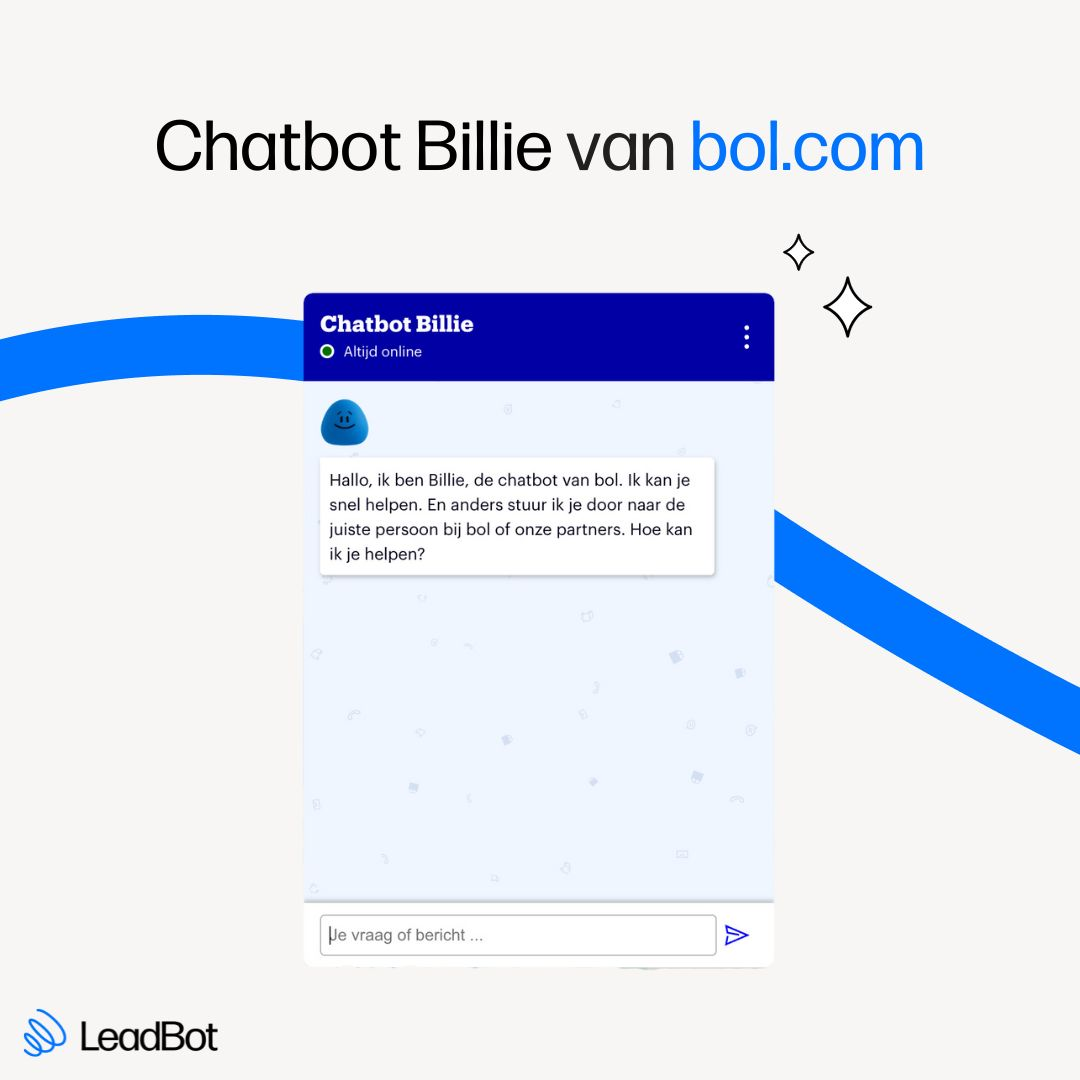
A chatbot is an interactive tool designed to have real-time conversations with website visitors, without a real person being needed. Chatbots run on artificial intelligence (AI), automated rules, natural language processing (NLP) or machine learning (ML). They process data in order to respond to different kinds of requests. Chatbots have become a popular tool that saves companies time and money and delivers a better customer experience. They are often used to relieve the customer service department, answering frequently asked questions, solving problems or providing technical support as well as possible. You may know the customer service chatbot of Dutch retailer Bol. It even got its own name: Billie.
What is a leadbot?
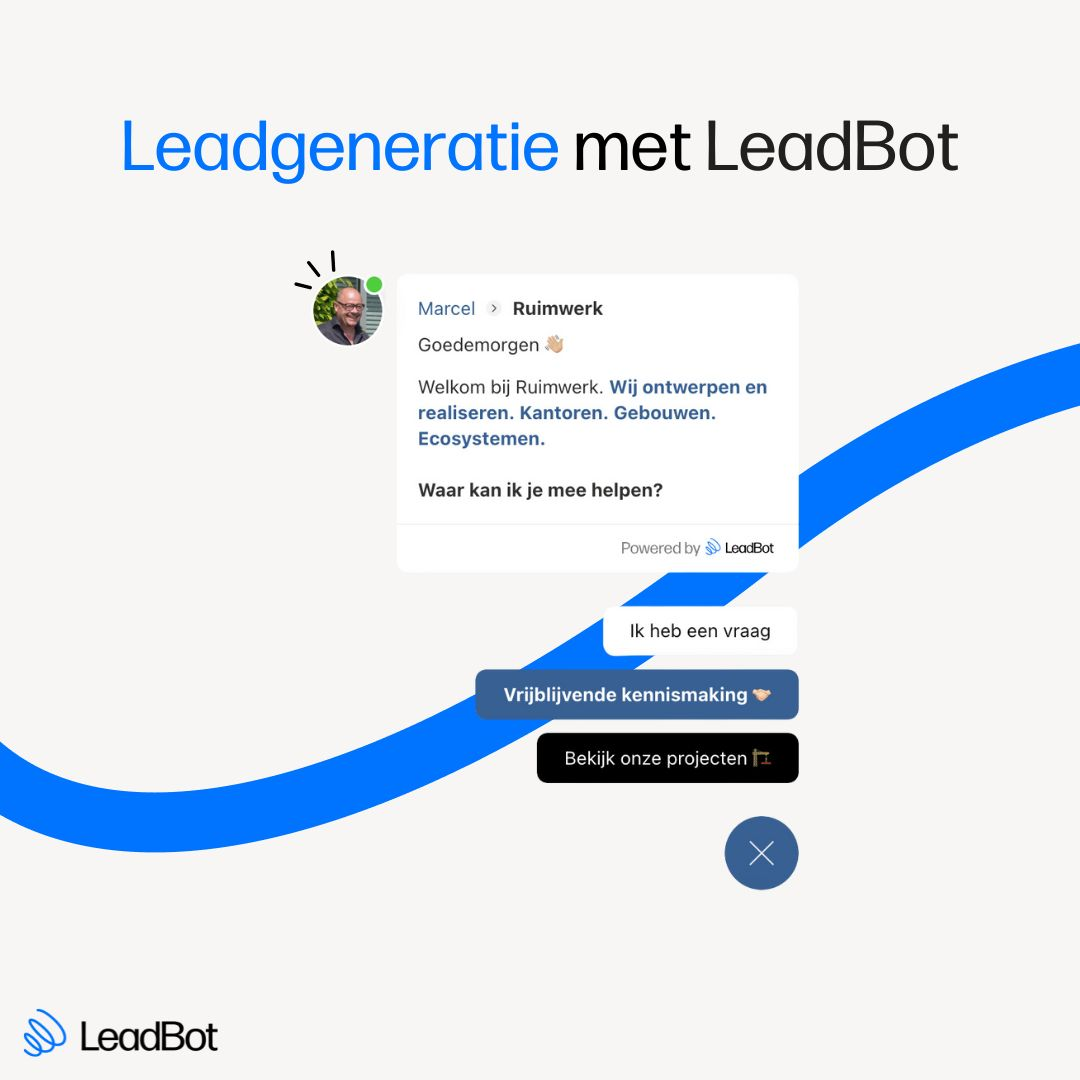
A leadbot is a marketing tool that helps generate leads: potential customers who actively show interest. A leadbot greets website visitors in a personal way, presents the most important call-to-actions and encourages low-threshold contact. The tool is not programmed for live chat. Instead, it works with a predefined flow diagram. The diagram ensures the visitor takes the desired action with just a few clicks. You can fully configure the copy, actions and forms yourself. That's how you increase your website's conversions. Leadbots are therefore not only a service tool, but also a lead generation tool.
A leadbot also has the advantage of supporting multiple departments within your company, while a chatbot is generally focused on customer service. With a leadbot, leads land directly with the right contact person or department. A warm lead goes to sales, a service question to customer service and a job application to HR. That's how you distribute marketing leads efficiently.
What are the 3 main differences between a leadbot and a chatbot?
A personal approach with a different goal
Research shows that people increasingly want interaction, while organisations invest less and less in personal contact. Both a chatbot and a leadbot let you offer visitors this interaction on your website. With both tools, however, you're not talking to a real person. To make the interaction feel more personal, you can add a name and photo to your bot. A chatbot and a leadbot each take their personal approach towards a different goal, though. A chatbot aims to answer (frequently asked) questions as quickly as possible, without a real person getting involved. A leadbot aims to use a personal approach to get people to take a desired action. Within a leadbot, you can even show a different person on each page. So on the careers page the visitor is greeted by the HR manager, and on the quote page by the sales manager. That creates recognition and ensures your audience always connects with the right person.
Lead generation
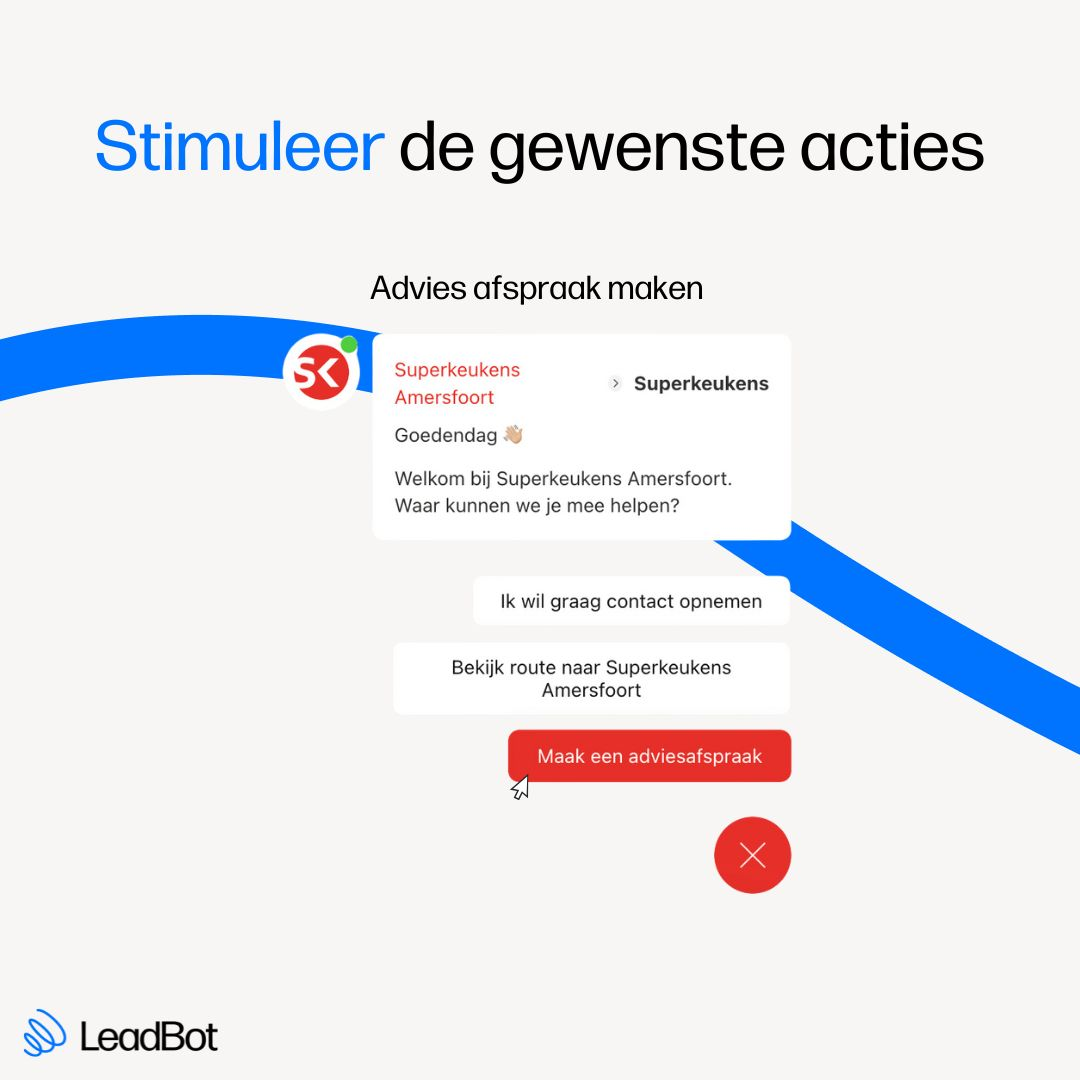
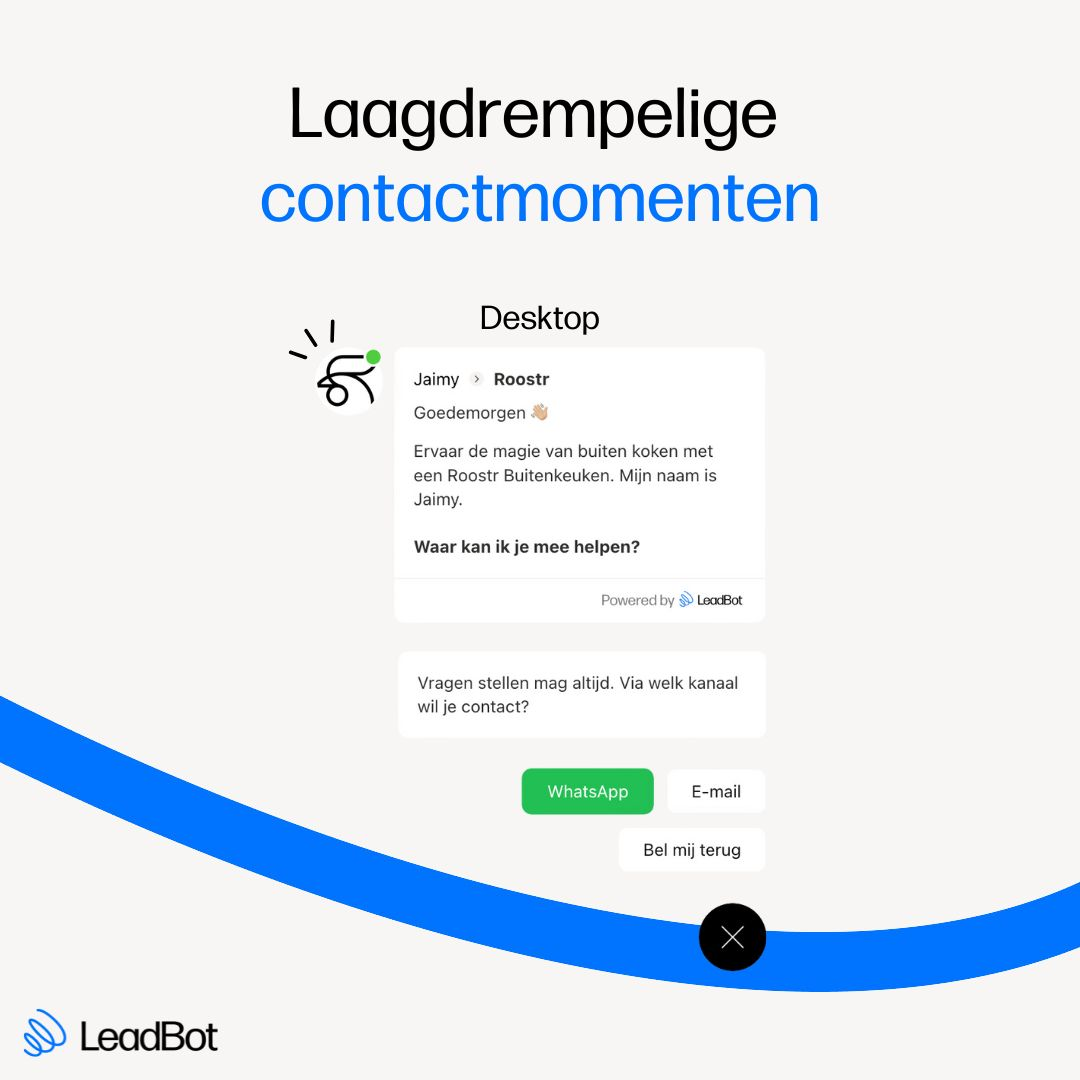
On average, 98% of visitors leave a website without leaving their details. But by deploying a leadbot, you get more conversions out of your website. By configuring which buttons are shown, you can prominently highlight your website's desired hard and soft conversions. That's much harder with a chatbot. Although you can steer a conversation to some extent with the answers the chatbot gives, the focus is on answering the website visitor's questions. And that's the big difference: do you want to relieve customer service, or generate more leads? How does a leadbot turn website visitors into leads? By bringing desired actions directly to their attention with a call-to-action button. A few examples of smart buttons: downloading a brochure, booking a consultation or requesting a free trial class. That way, your website visitor becomes a lead at the touch of a button. The low-threshold contact options in a leadbot also help you capture more leads. You offer visitors the option to ask a question via WhatsApp, phone, email or leave a callback request. By asking a short question via a leadbot, you take away the first barrier to getting in touch. In our customer cases you can see this delivers an extra boost in leads. Besides asking questions, forms in a leadbot can also be used to book appointments, submit job applications or request quotes. The simpler the form, the lower the barrier for the visitor.
Live chat
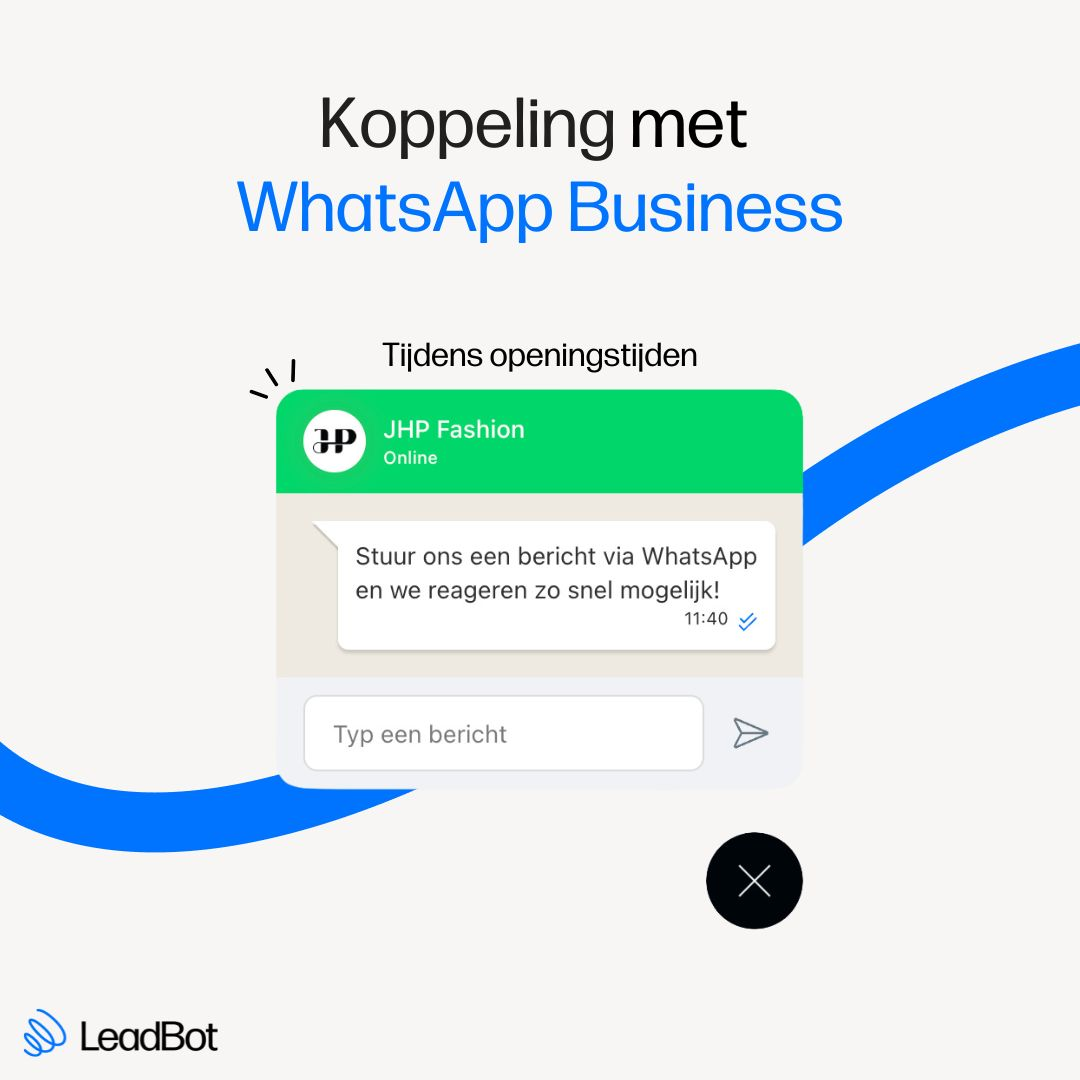
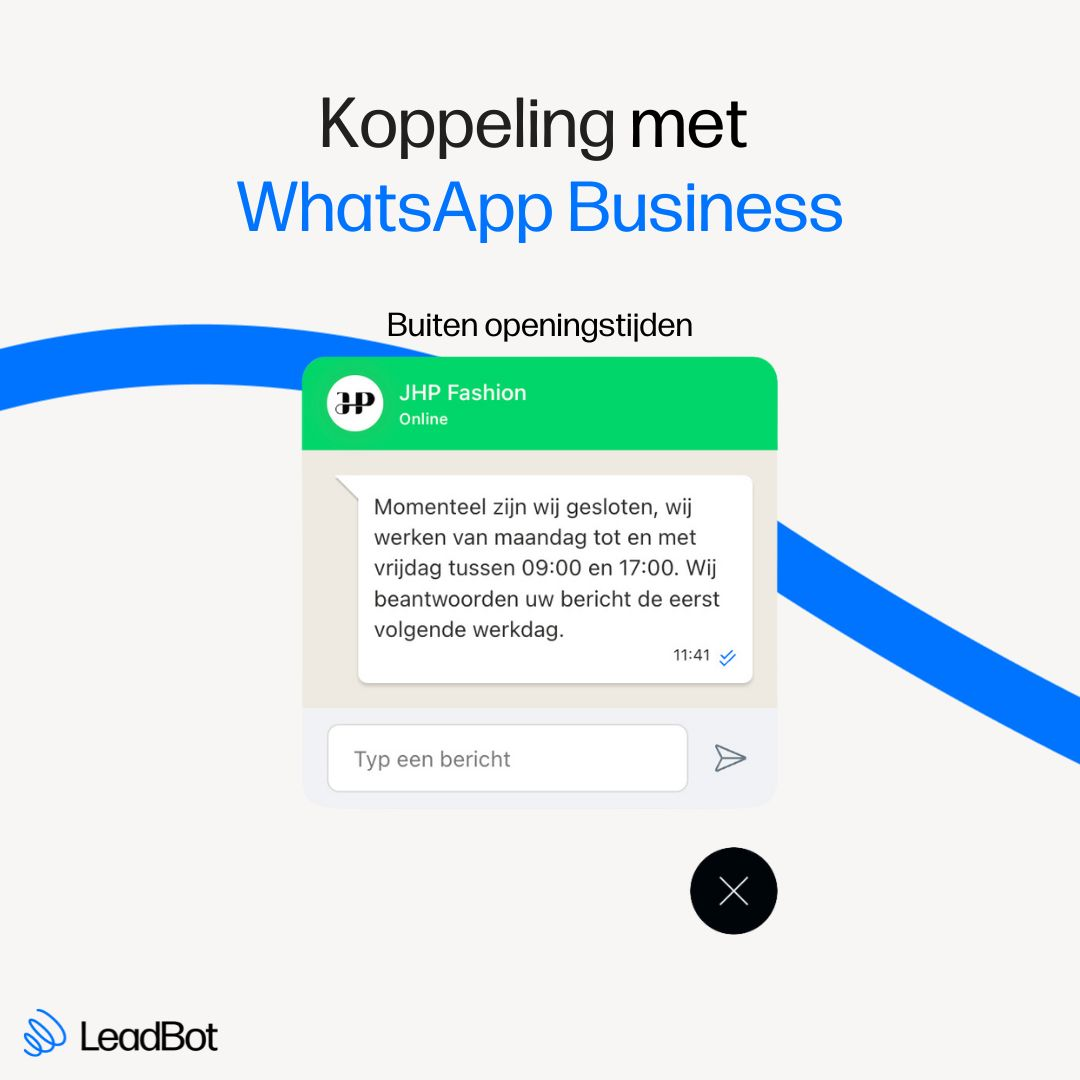
We mentioned it briefly, but the advantage of a chatbot is relieving customer service. A chatbot's focus is entirely on answering questions and helping customers as well as possible. The chatbot determines its answers based on all the information provided in advance. The downside of this system is that it's more error-prone than a leadbot. When a customer asks a question the chatbot can't answer, or one that's too complex, that can lead to frustration. The customer then has to wait until they can speak to an employee. A chatbot simply can't solve every question or problem. Live chat isn't possible in a leadbot. But with a single click, you can connect the visitor with an employee. A leadbot integrates with WhatsApp Business, so visitors can easily chat with a real employee. This contact option takes less effort than asking your question by email. There's also less time pressure to respond on WhatsApp compared to a live chatbot. On WhatsApp, people don't expect an immediate reply, partly because the chat is saved. Within a leadbot you can also clearly indicate your company's expected response time. JHP Fashion plays this smartly with an automatic message for both inside and outside opening hours.
A leadbot also has the advantage of supporting multiple departments within your company, while a chatbot is generally focused on customer service. With a leadbot, leads land directly with the right contact person or department. A warm lead goes to sales, a service question to customer service and a job application to HR. That's how you distribute marketing leads efficiently.
The differences at a glance
Where you might expect a chatbot and a leadbot to be similar, they differ considerably in most areas. That's because they each serve a different goal. A chatbot answers frequently asked questions and is focused on helping customers, whereas a leadbot drives an increase in hard and soft conversions. A leadbot also connects visitors in a low-threshold way, for example via WhatsApp or email. By routing visitors to the right department or person from within a leadbot, they get personal help and leads are distributed efficiently within the organisation. A chatbot, on the other hand, serves the visitor in a live chat with automated answers. Curious what a leadbot could do for you after reading this blog? Contact us at partners@leadbot.nl. Or maybe you're already convinced! We get it. Then start your free 30-day trial right away.